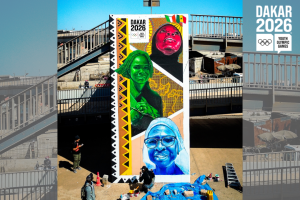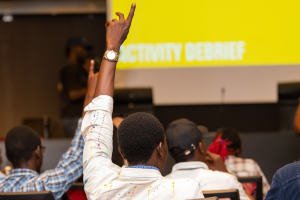


In April 2025, the very first cohort of the Learning Academy began its training. Designed for young professionals, the program aims to develop skills in management, event operations, and beyond.
“We are looking for future leaders.” On that day, Ibrahima Wade, General Coordinator of the COJOJ, delivers one of his signature lines in a deep, deliberate tone. We are at the opening of a Learning Academy training session, and the former athlete is keen to underscore the program’s core ambition: to empower an entire generation to reshape the course of history in Africa.
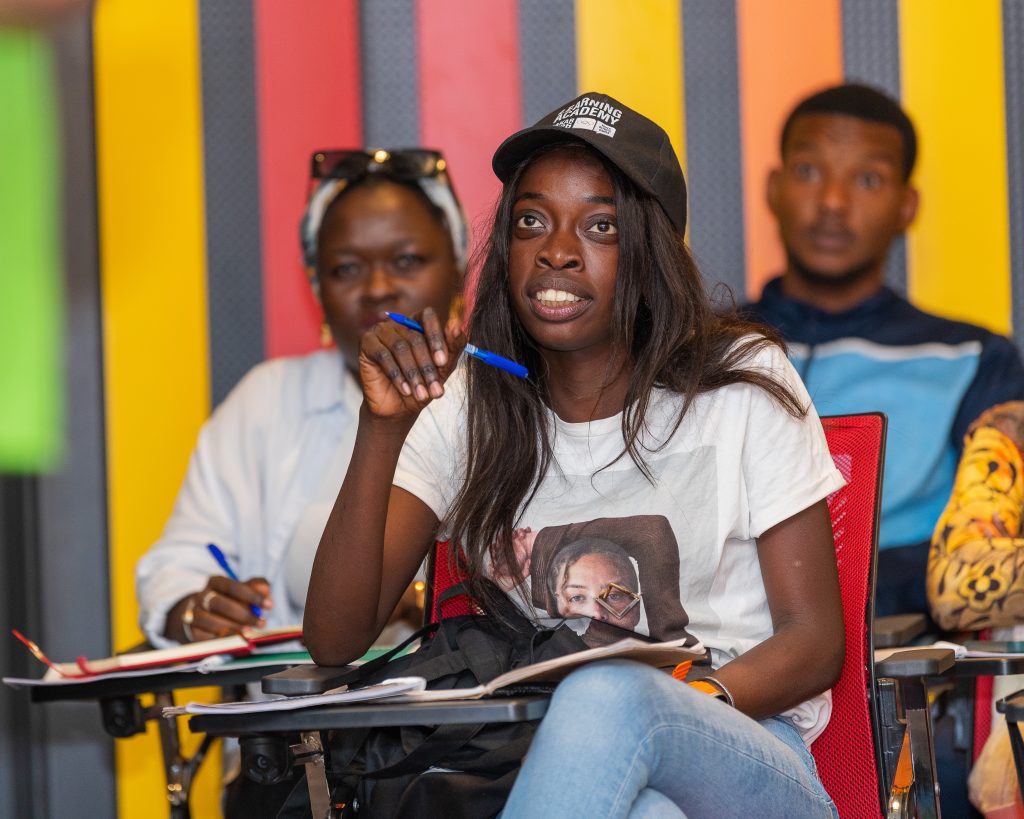
Launched through a partnership between the COJOJ, 3FPT, and BEM Dakar, the program offers participants “ten days of training delivered by the IOC, followed by five days focused on interpersonal skills development.” Through interactive sessions and hands-on exercises, participants gain essential knowledge in Games planning, sports and event operations, and acquire skills tailored to the responsibilities of their respective functional areas, as explained by Olympics in a recent article.
Bocar Laurent Sy, Executive Director of Human Resources at the COJOJ, drives the point home for participants: “You are not only representing Senegal, you are representing the world.”
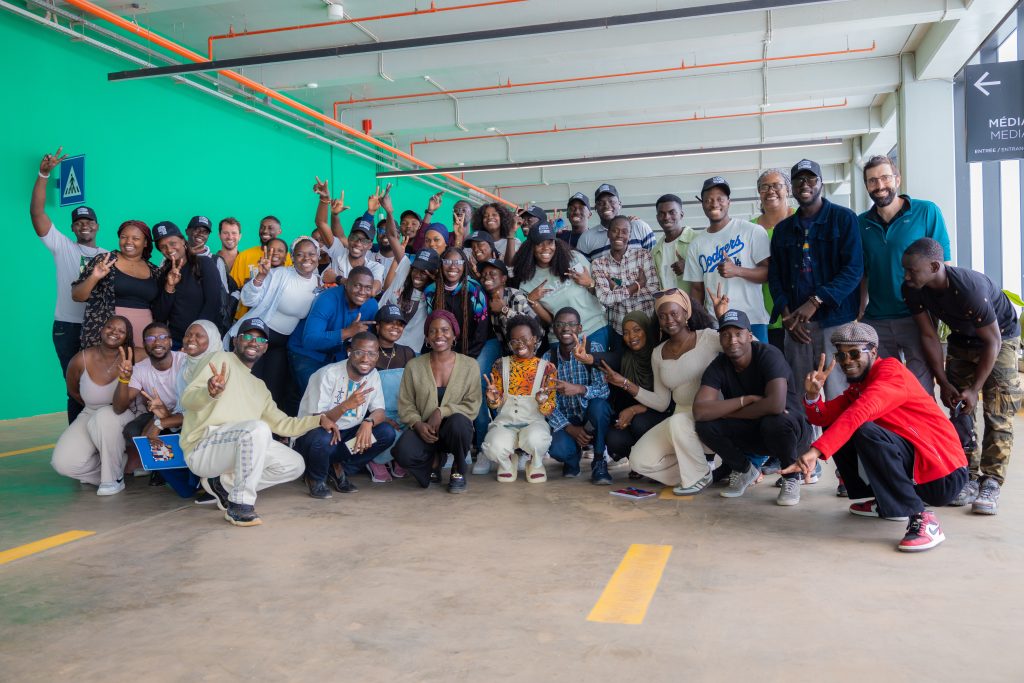
A change of course
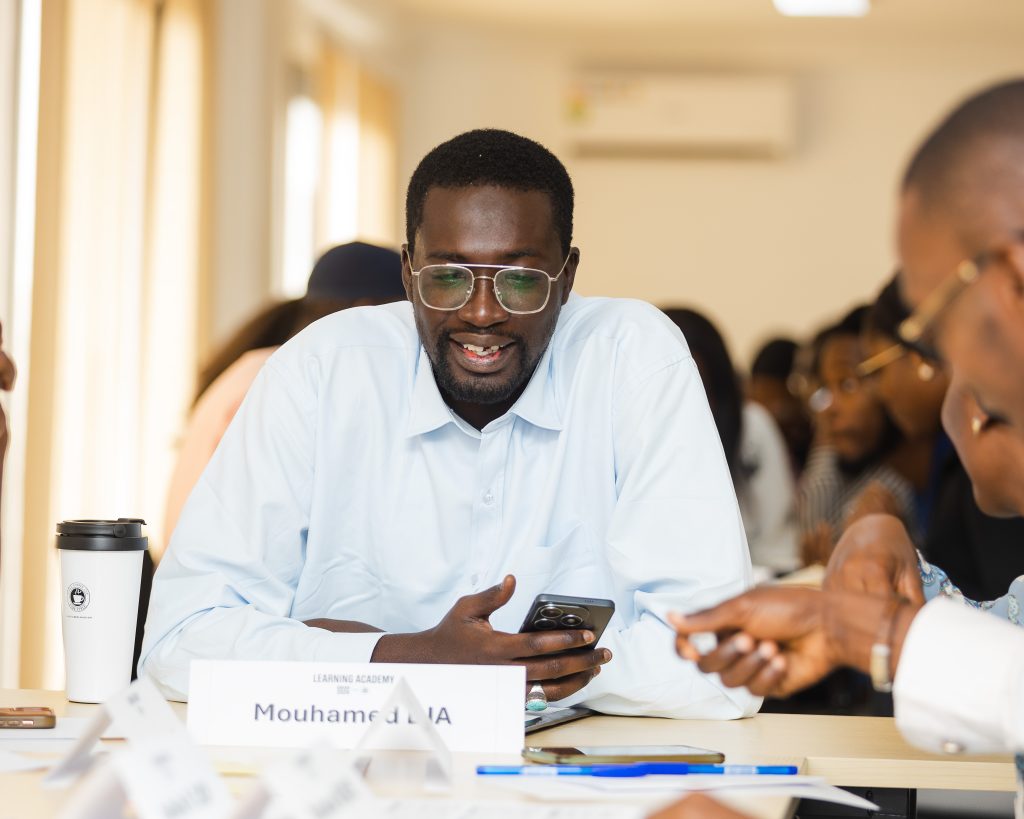
Seated among the “Learners”, the name given to Learning Academy participants, Mouhamed Dia listens intently, dressed in a suit and tie. He sits not far from Ibrahima Wade. Not long before joining the program, his professional life looked very different.
“A year ago, I was raising chickens. Today, I am a project and operations coordinator within the Games Delivery department (GAD),” he explains, noting that this is “one of the most sought-after positions within the COJOJ.”
One year after joining the inaugural cohort, he is unequivocal: “This program completely changed my life.” He recalls his very first day: “I felt an unusual heaviness in my body. I wondered where it came from, and then I realized it was the weight of responsibility.”
Seizing an Opportunity
Sokhna Dia, also a member of the first cohort, saw her career take a completely different turn thanks to the Learning Academy. Holding a degree in quality, hygiene, safety, and environmental management, she initially worked for a cleaning company servicing offices in Dakar. By chance, she became a maintenance worker at the COJOJ and began following the committee’s activities from a distance.
Behind the scenes, she watched the organization evolve, subscribing to its official social media accounts. Naturally curious, she kept up with its developments and eventually discovered the Learning Academy. Intrigued by the program, she recorded her application video right there in the office using her phone. Her application stood out, and she was selected for the first cohort.
“This program is incredible for us, for Senegalese youth, and for Africa,” Sokhna Dia says, encouraging other young people to follow her example.
A Tangible Legacy for Africa
“The Learning Academy is far more than a training center,” says Ibrahima Wade. “It is a strategic lever, a laboratory of skills, a space where excellence becomes accessible, where African potential is structured, organized, and elevated.”
At the launch of the first cohort, nearly 1,900 applications were submitted to the COJOJ. In total, nine cohorts will be trained, with more than 400 young people expected to play an active role in organizing the Dakar 2026 Youth Olympic Games, the first of their kind on African soil.
“The idea is very simple,” Bocar Laurent Sy explains. “We want to train them so we can build a lasting legacy in terms of skills and professions for major events.” Ibrahima Wade echoes this vision: “The legacy we are building goes beyond infrastructure or programs. Dakar 2026 will leave behind skills, leaders, women and men capable of delivering major sporting events across Africa.”
For Sokhna Dia and Mouhamed Dia, that legacy is already taking shape. After Dakar 2026, both plan to continue developing their expertise in management. “For me, what comes next is always aiming higher,” Mouhamed Dia concludes his sights already set on the Olympic Games in Los Angeles in 2028.